

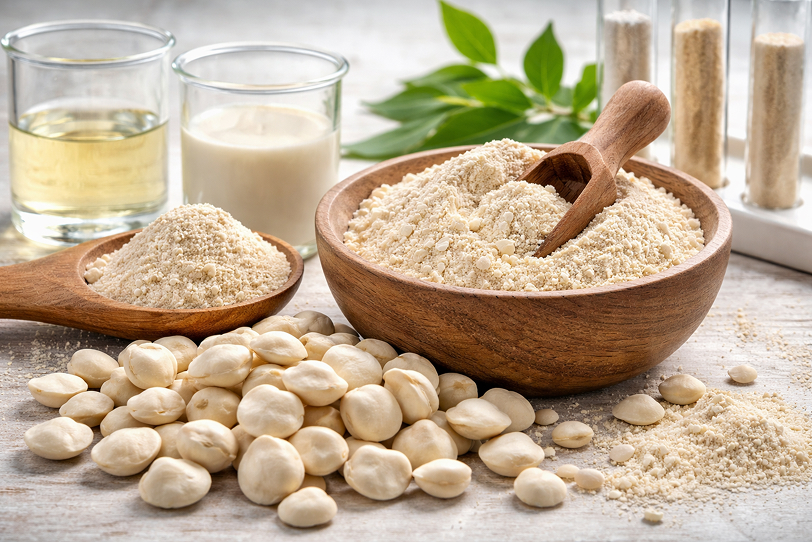
Challenge
Characterize the functional fractions obtained from Lathyrus sativus flour, a traditional legume now largely unused in Spain, with the aim of reviving its cultivation due to its resilience, sustainability, low carbon footprint and soil-regenerating potential.
The project develops technical knowledge on its functionality and food safety to assess its suitability within the regulatory framework for new food ingredients.
Project results
The project confirmed that the physical milling and air-classification processes studied are safe technologies that do not generate neo-contaminants or additional chemical toxins. This provides relevant evidence for the development of functional fractions from legume flour.
The work also showed that these processes redistribute compounds already present in the raw material, making rigorous analytical control of the resulting fractions essential.
From a regulatory perspective, the project highlighted the absence of a harmonised definition at European level of what constitutes a “protein concentrate”. This gap leads to differing criteria across countries and hampers the free movement of these ingredients within the single market, reinforcing the need to submit a formal consultation under Article 4 of Regulation (EU) 2015/2283.
